
Many people have a love-hate relationship with heartburn. Especially if you frequently suffer from acid reflux or heartburn, you probably don't feel very comfortable with it. Do you immediately reach for Rennie or omeprazole? You know they work quickly, but they're not really a long-term solution.
Please note: This blog is not medical advice. Always consult your doctor before making any changes.
What is stomach acid needed for?
Stomach acid has a very important function in your body and in your digestion.
It helps you digest your food and protects you from any viruses, parasites, fungi, etc. Intruders that want to enter your body are immediately killed by your stomach acid.
If you slow down that acid too much, you can actually get MORE complaints in the long term.
Stomach acid ensures that the proteins in your food are properly digested. Without stomach acid, proteins remain " heavy in the stomach ."
I often see that people suffer from a bloated stomach and protein farts .
Proteins that aren't properly digested by your body can become a breeding ground for unwanted bacteria. These bacteria can then thrive and grow faster .
Your body receives fewer nutrients and at the same time those invaders get more to eat . This leads to an unbalanced ratio.
Stomach acid and digestive juices in your stomach are also very important for absorbing nutrients such as B12, zinc and calcium from food.
If you regularly suppress your stomach acid with an antacid, you increase the risk of deficiencies.
Why then do we so quickly reach for antacids?
So stomach acid is very useful in itself. But if it ends up in the wrong place , it's a different story.
Basically, your stomach closes off when food enters your stomach, preventing food and stomach acid from flowing back into your esophagus.
If stomach acid does rise up into your esophagus, you'll feel it immediately. This causes unpleasant symptoms. Many people experience a burning sensation , acid reflux , or pain .
It's perfectly understandable, of course, that if this happens frequently, you'd reach for an antacid. But there's often a pitfall: while such a pill may alleviate the feeling, it doesn't address the underlying cause .
And unfortunately, people often take antacids unnecessarily for too long , without really needing them or without their bodies benefiting from them.
Why does stomach acid go back into your esophagus?
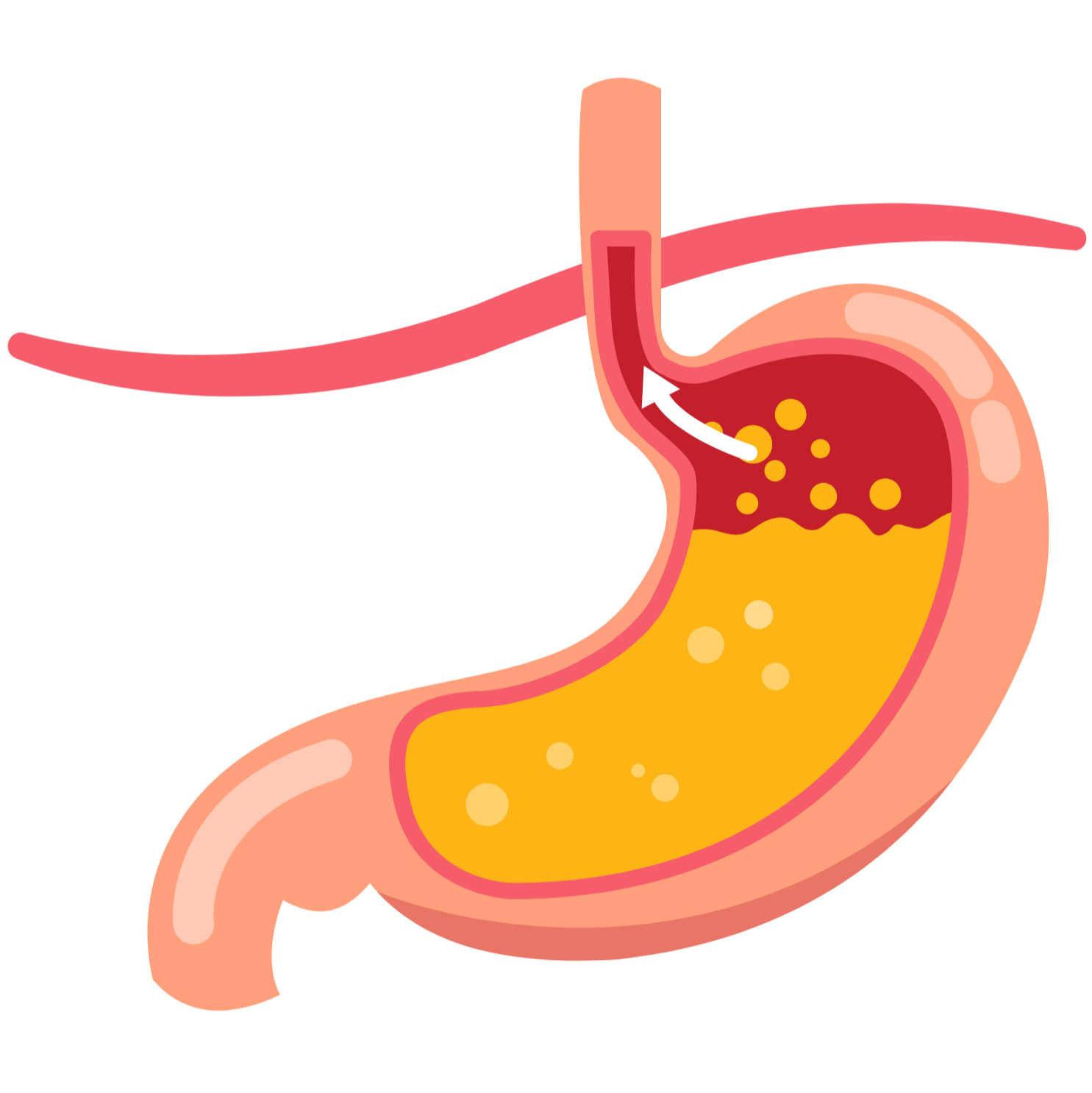
As I mentioned, your stomach normally closes off to prevent acid from entering your esophagus . This keeps your stomach acid in your stomach. But this doesn't always happen effectively.
When you have too little stomach acid in your stomach, there is less stimulus for that sphincter to remain firmly closed.
This can lead to stomach contents (including stomach acid) refluxing into your esophagus and/or remaining in your stomach for a longer period of time. This is often experienced as a heavy feeling after eating , especially after eating a lot of (animal) protein .
What you experience as "too much stomach acid" is often actually a lack of stomach acid! In practice, I often see that by supporting and strengthening stomach acid, the symptoms disappear and your body digests much better and more smoothly.
Stress also plays a major role in this. When you're under a lot of stress, your body goes into survival mode ( fight or flight ) instead of rest and digest mode.
In fight-or-flight, the body is really just surviving and there is simply no energy, time, or attention to digest.
In that stress mode all sorts of things happen:
- You produce less saliva, stomach acid and bile (important for your digestion!!)
- Fewer digestive enzymes are released
- The blood supply to your intestines decreases
- Your bowel movements ( peristalsis ) become slower
And if you do decide to eat something at such a moment, it cannot actually be properly digested by your body.
In our busy and stressful lives, it's no wonder so many people these days struggle with their digestion . This includes producing less stomach acid, which in turn causes reflux , heartburn , and other symptoms.
Note: Are you taking antacids? Never stop taking them abruptly. Always reduce your dosage gradually, preferably under the guidance of your doctor or therapist.
Looking beyond just the symptom of heartburn
Instead of immediately taking an antacid, you can look further into the cause. WHY are you experiencing heartburn? Look for the underlying trigger .
That answer often makes perfect sense if you stop and think about it. Consider, for example:
- How do you eat? How much do you eat? When do you eat?
- Do you eat in peace? Without distractions , with attention to your food, and without stress?
- Do you drink (a lot of) coffee or alcohol?
- Do you chew well?
All these factors play a role. You can adjust them where necessary, and often achieve significant improvements , without immediately having to take antacids.

Natural remedies for heartburn
What can you do if you continue to experience heartburn ? My advice is to support your body and stomach acid, rather than suppress it. Here are some possible ways to do this:
1. Betaine HCL with pepsin
My personal number 1. Especially if you suffer from a lack of stomach acid (which is more common than you think).
Betaine HCL replenishes stomach acid , helping your digestion function more efficiently. You can take a test to see if you're actually deficient and determine how much you need (temporarily).
Here's how to test it:
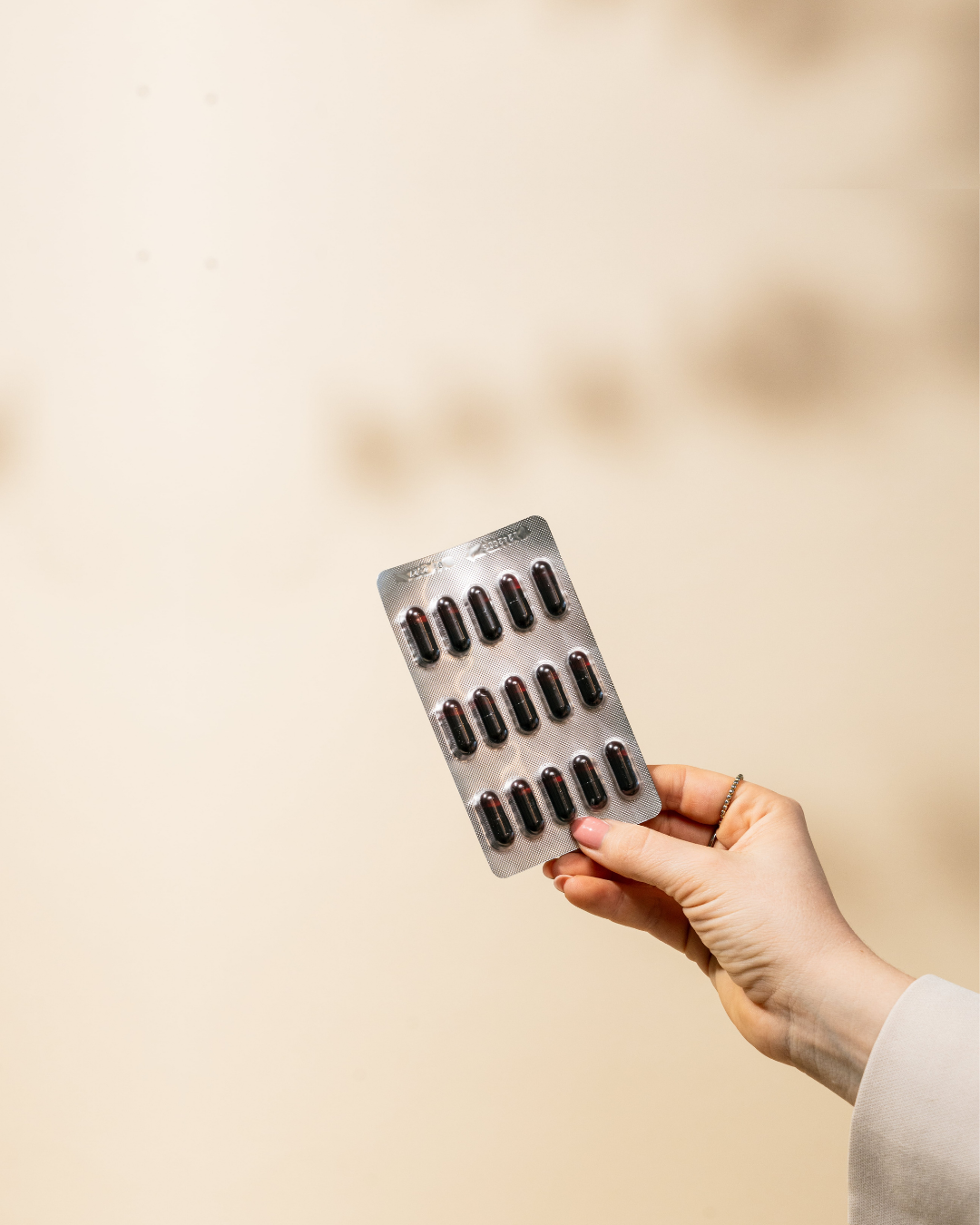
Start with 1 capsule of Betaine HCL with a meal (with protein). If you don't experience any reaction , you can gradually increase the dosage over the next few days (up to approximately 3 capsules maximum).
Once you feel a noticeable feeling in your stomach, you'll know you've had enough. Then, take one dose off and continue taking that dose to support your stomach acid.
NB: Never use this without consulting a doctor if you already have stomach ulcers or severe gastritis! You must first soothe the mucous membranes.
2. Apple cider vinegar or lemon water
This also gently helps your body to produce more of its own stomach acid .
Take 1 teaspoon of raw (cloudy) apple cider vinegar or fresh lemon juice in a small glass of lukewarm water, 10–15 minutes before a meal.
3. Ginger
Ginger is such a wonderful natural aid . It strengthens the stomach , supports gastric emptying, and helps reduce inflammation. Drink fresh ginger tea before meals, or take a small ginger shot .
4. Aloe vera juice
Aloe vera has a calming effect and helps restore your stomach lining . Choose a good quality! Drink 30 ml about 10-15 minutes before eating.
Please note: In high doses this can have a laxative effect.
5. Zinc
A good amount of stomach acid is necessary to absorb zinc from our food , and we also need a high level of zinc in the body to produce stomach acid . There is therefore an important symbiotic relationship between the two.
In food, you can get zinc from oysters, red meat and shellfish.


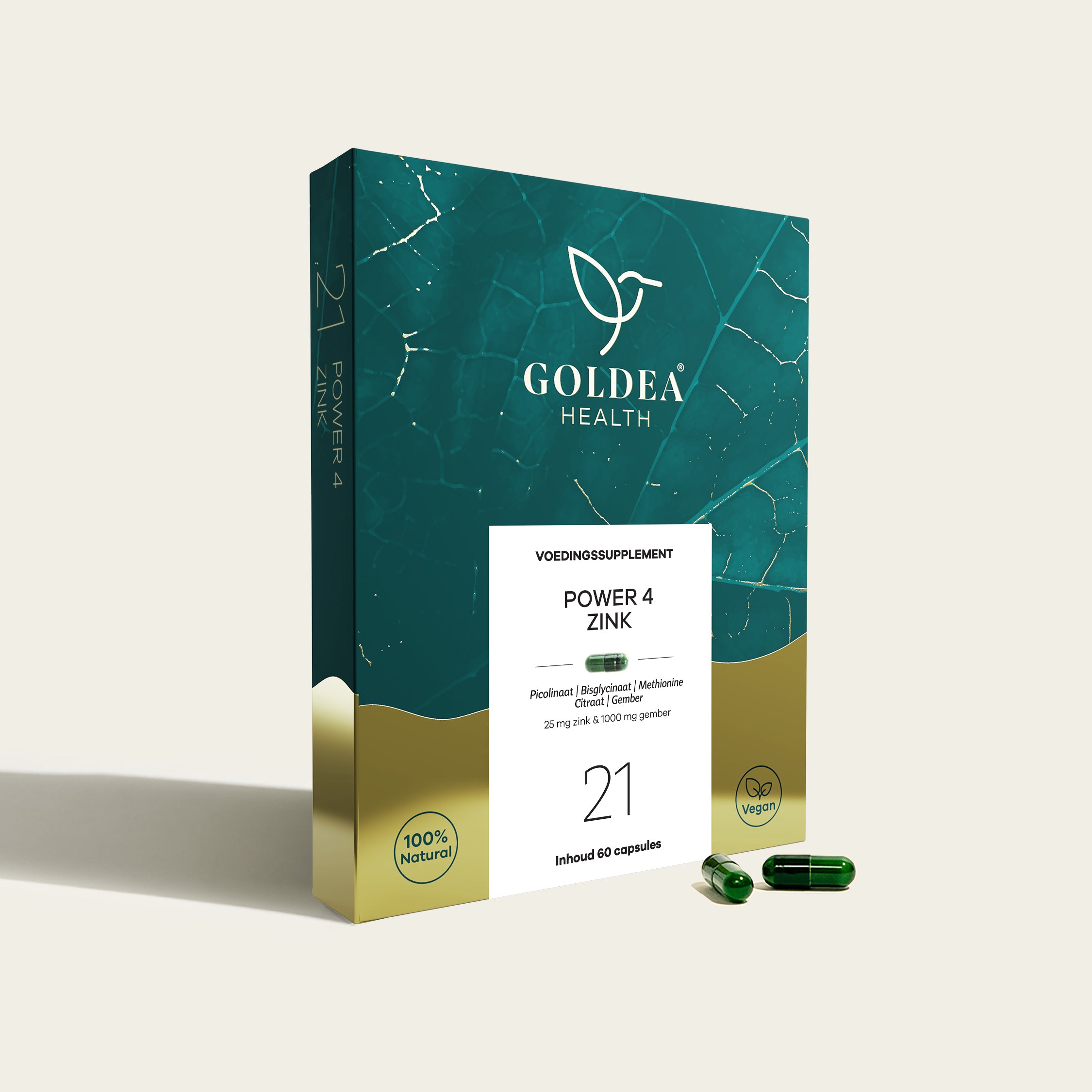

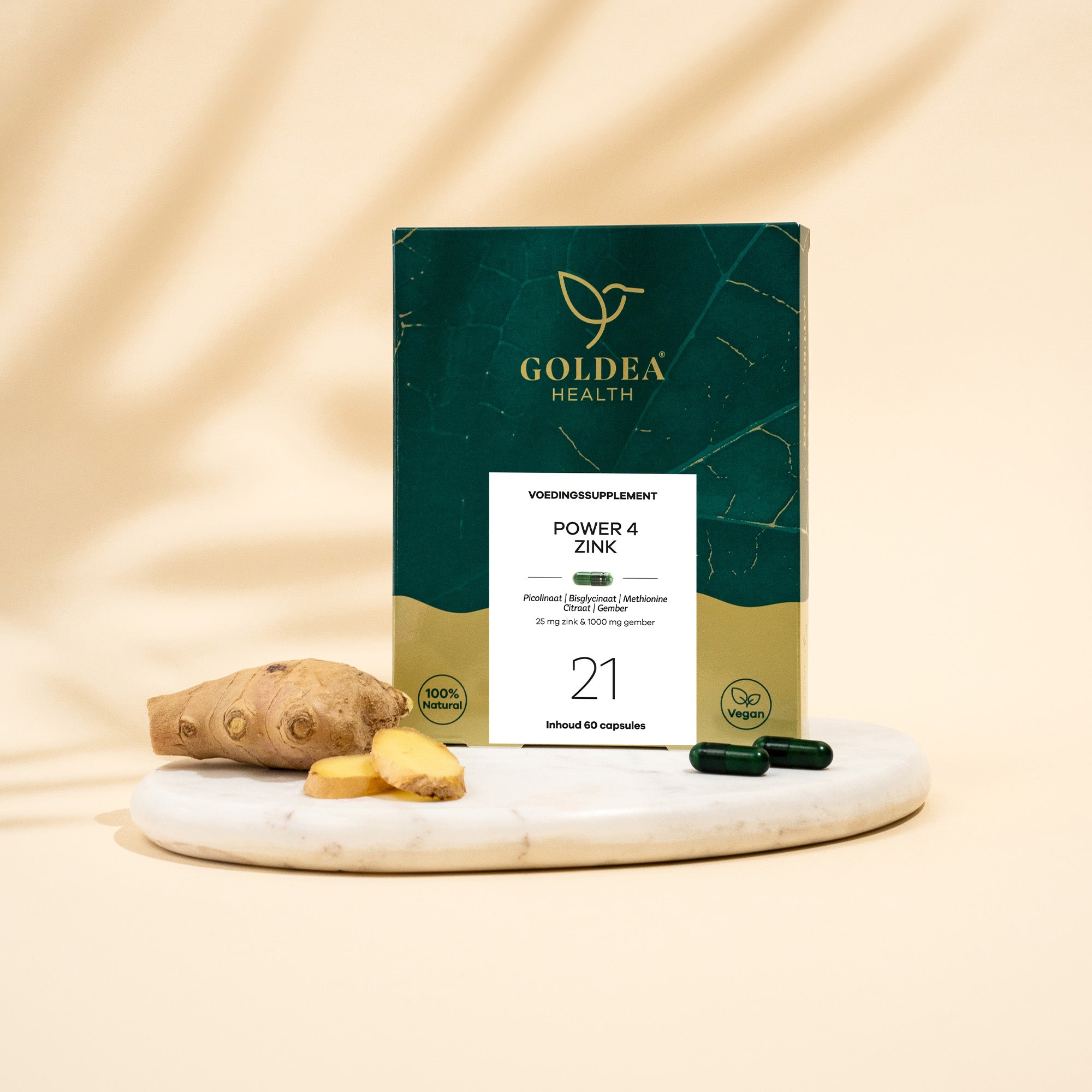
Power 4 Zinc
18,95
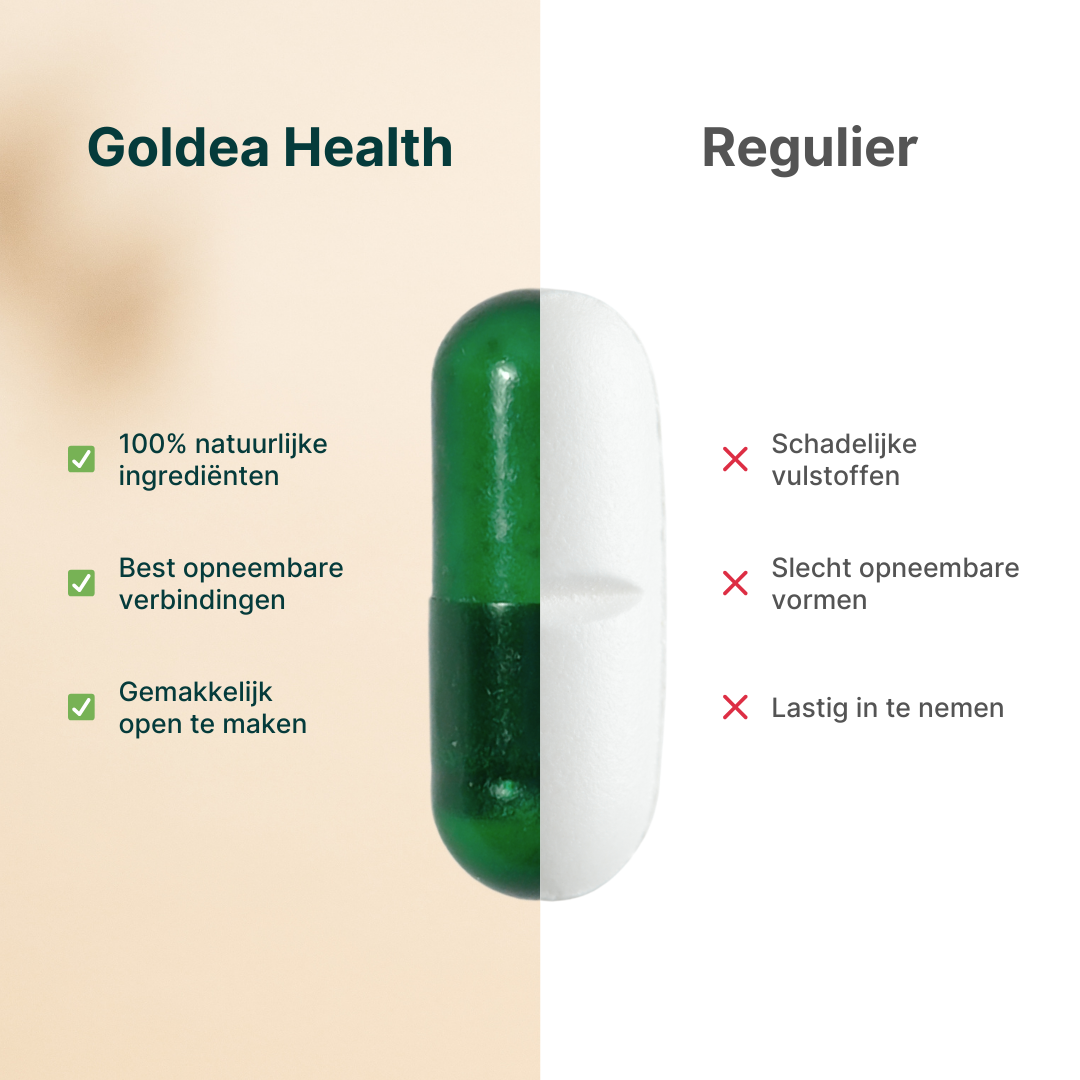
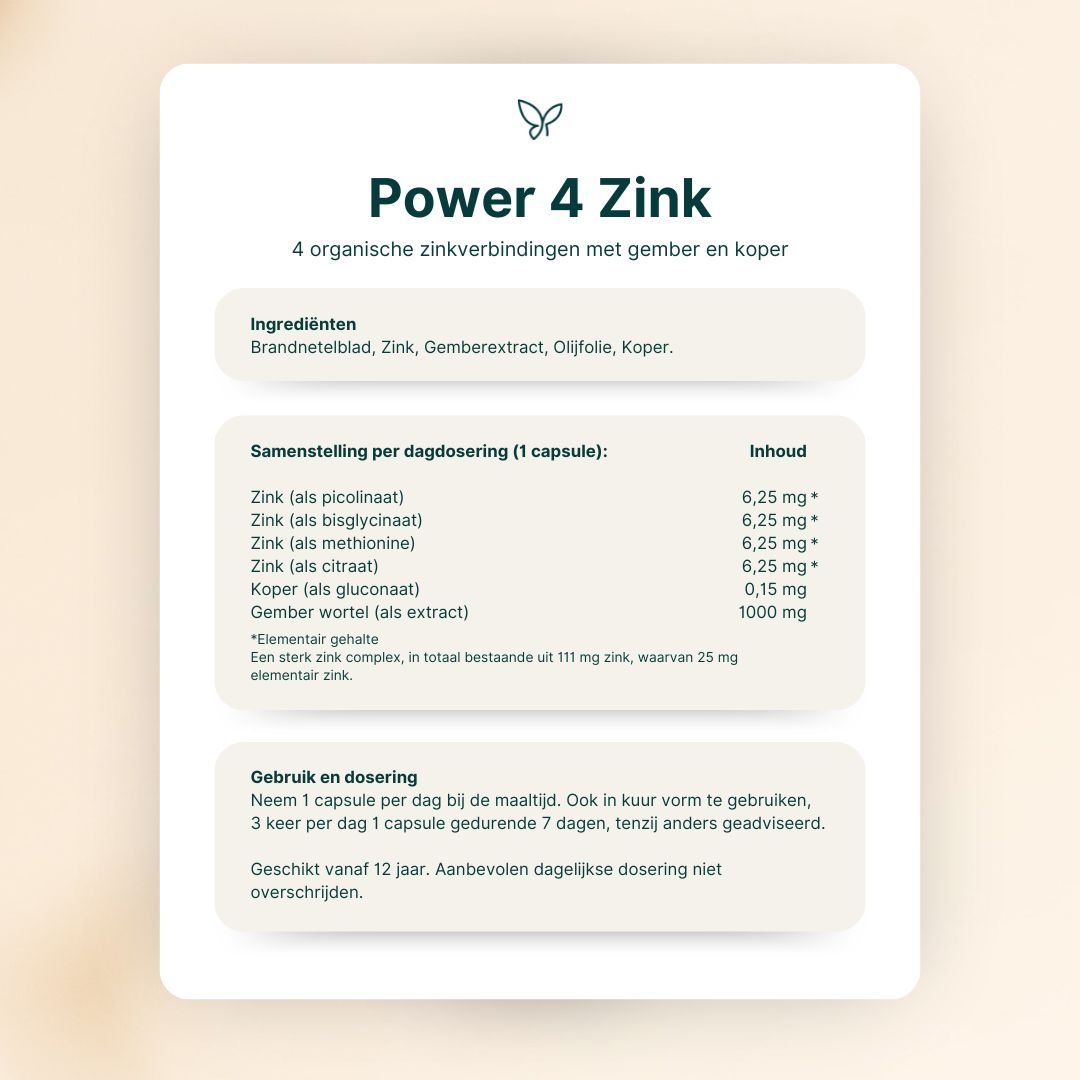
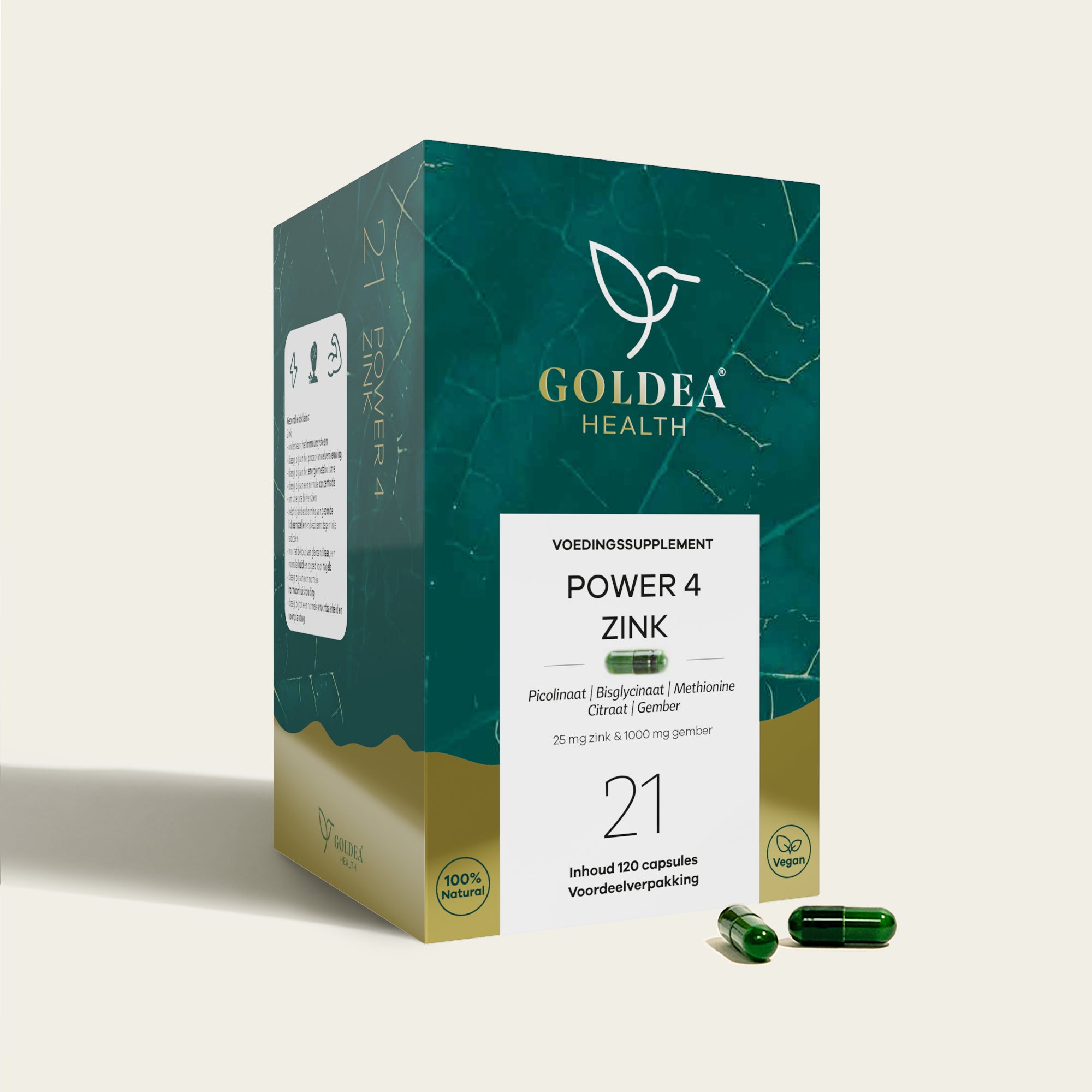
If you don't get enough of it, it might be helpful to supplement with zinc. In our Power 4 Zinc, we combine four easily absorbed forms of zinc with ginger. This combination ensures a strong effect in the body and supports your digestion . We've created a unique formula that supports your body in multiple ways.
6. Slippery elm (red elm)
Slippery elm forms a soothing layer over your stomach lining and esophagus. Ideal if you have sensitive mucous membranes.
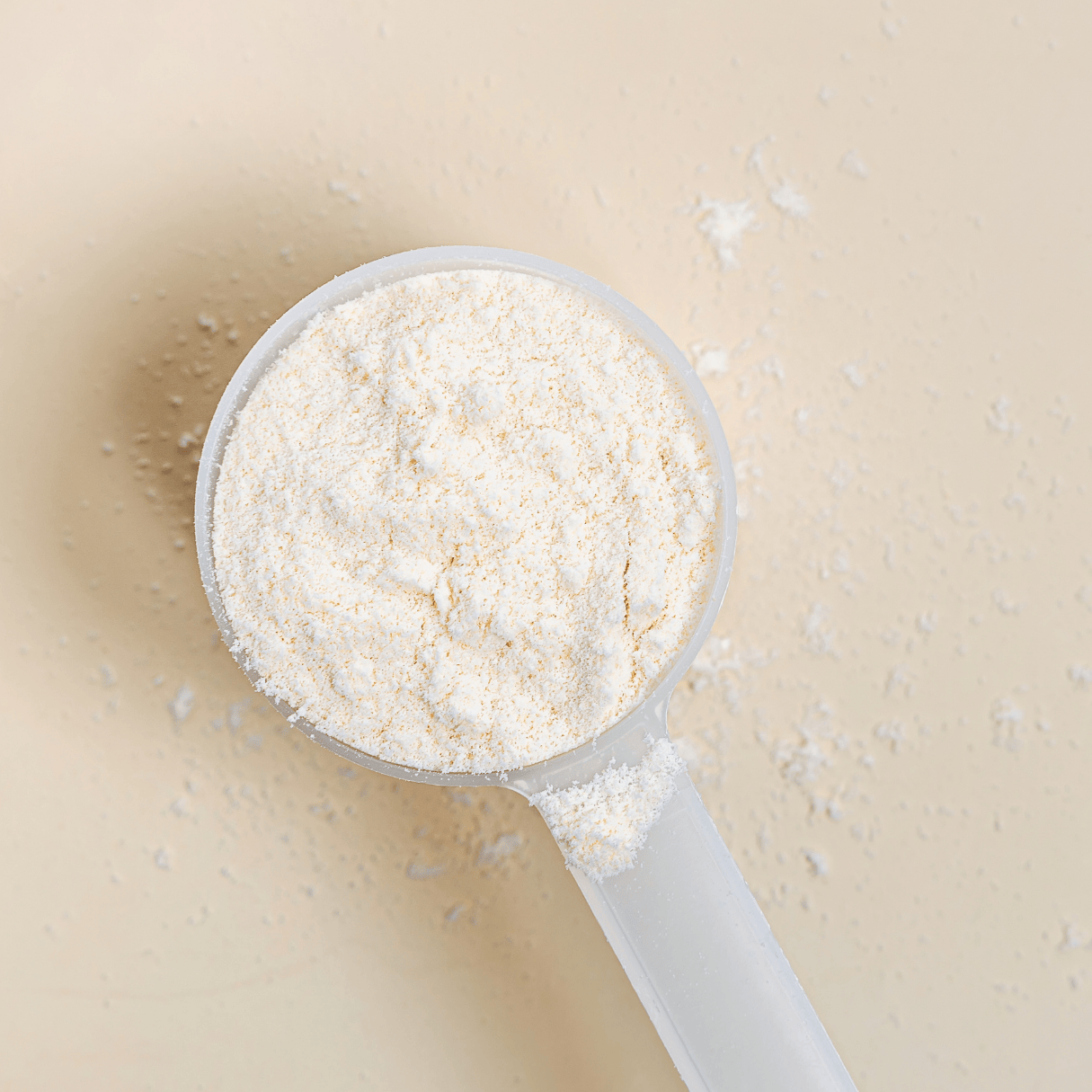
This is available as a powder (to be dissolved in water) or as a tea.
7. Baking soda
Last but not least : Baking soda. If you need immediate relief from a burning sensation, baking soda works well as a temporary solution.
Use: Dissolve ½ to 1 teaspoon in a glass of water.
Important: Do not use this for a longer period (max. 2 weeks), as it (like antacids) has a purely symptomatic effect. Use caution if you have high blood pressure.
Extra tip
I also recommend not drinking much during and 30 minutes before/after meals. This dilutes your stomach acid , making it harder for it to work effectively.
Core of the story
Ultimately, it comes down to addressing the root cause and not just suppressing the symptoms .
With lifestyle and a few natural remedies, you can often make a huge difference. This way, you can often calm your stomach in a much more gentle way. And that ultimately benefits your whole body .

Get the most out of your health!
This blog was written by Laura Contreras , an orthomolecular therapist and registered intestinal therapist. In my practice, I treat a wide variety of complaints daily, from digestive issues to fatigue and skin problems.
Have you tried a lot, but are you missing a personalized plan? Then I'd love to help you understand your body's signals and find solutions that work for you. Book your consultation below.
Veelgestelde vragen
Wat is een natuurlijk alternatief voor maagzuurremmers?
Een natuurlijk alternatief voor maagzuurremmers begint niet met één wondermiddel, maar met kijken waarom je maagzuur omhoogkomt. Denk aan te snel eten, slecht kauwen, stress, grote maaltijden, koffie, alcohol, laat eten of een trage spijsvertering.
Soms kunnen natuurlijke opties zoals betaine, gember, aloë vera, slippery elm, appelazijn of ondersteuning van de spijsvertering helpen. Maar dit hangt af van jouw klachten.
Kun je zomaar stoppen met omeprazol of pantoprazol?
Nee. Stop niet zomaar abrupt met maagzuurremmers, zeker niet als je ze al langere tijd gebruikt. Je maag kan tijdelijk extra zuur gaan produceren nadat je stopt. Daardoor kunnen klachten terugkomen of zelfs erger voelen. Dit wordt rebound genoemd. Thuisarts geeft ook aan dat stoppen met PPI’s, zoals omeprazol en pantoprazol, lastig kan zijn omdat de maag moet wennen na het stoppen.
Bouw daarom rustig af en overleg met je arts of apotheker. Zeker als je maagzuurremmers gebruikt vanwege een maagzweer, slokdarmontsteking, Barrett-slokdarm of als maagbeschermer bij medicijnen zoals NSAID’s.
Waarom krijg je maagzuurklachten?
Maagzuurklachten ontstaan vaak doordat maaginhoud terugstroomt richting je slokdarm. Dat kan een branderig gevoel, zure oprispingen, pijn achter het borstbeen of een brokgevoel geven.
De oorzaak ligt niet altijd simpelweg bij “te veel maagzuur”. Het kan ook te maken hebben met stress, een volle maag, laat eten, overgewicht, zwangerschap, bepaalde medicatie, alcohol, koffie, vet eten of een sluitspier die minder goed werkt. Daarom is alleen maagzuur onderdrukken niet altijd de hele oplossing.
Zijn maagzuurremmers slecht voor je?
Maagzuurremmers zijn niet per definitie slecht. Ze kunnen heel nuttig zijn bij duidelijke medische indicaties, zoals ernstige reflux, maagzweren of bescherming bij bepaalde medicijnen. Het probleem zit vooral in onnodig lang gebruik zonder evaluatie.
Uiteindelijk zorgen ze wel voor minder maagzuur en maagzuur speelt een belangrijke rol in je vertering en opname van voedingsstoffen.
Kunnen maagzuurremmers invloed hebben op voedingsstoffen?
Ja, langdurig gebruik van maagzuurremmers kan invloed hebben op de opname van bepaalde voedingsstoffen. In de blog wordt B12, zink en calcium genoemd. Dat is logisch, omdat maagzuur een rol speelt in de vertering en opname van voedingsstoffen.
Gebruik je al langere tijd maagzuurremmers en heb je klachten zoals vermoeidheid, tintelingen, spierzwakte, een bleke huid of brain fog? Dan is het slim om dit met je arts te bespreken en eventueel bloedwaarden te laten controleren.
Wat kun je doen tegen brandend maagzuur zonder medicatie?
Begin simpel. Eet rustiger. Kauw beter. Eet kleinere porties. Ga niet direct liggen na het eten. Vermijd laat eten. Kijk kritisch naar koffie, alcohol, pittig eten, chocolade en grote vette maaltijden. En eet niet in totale stressmodus achter je laptop.
Je spijsvertering werkt beter als je lichaam snapt dat het veilig is om te verteren. Als jij eet alsof je wordt achtervolgd, krijgt je maag geen seintjes dat het goed z'n werk mag doen.
Kan stress maagzuur verergeren?
Ja. Stress kan je spijsvertering duidelijk beïnvloeden. Als je lichaam in actie-stand staat, krijgt vertering minder prioriteit. Je maakt vaak minder speeksel en spijsverteringssappen aan, je eet sneller en je lichaam verteert minder rustig.
Daardoor kan eten zwaarder vallen, kun je meer oprispingen ervaren en kan je maag gevoeliger reageren. Stress is niet altijd dé oorzaak, maar het is vaak wel benzine op het vuur.
Helpt appelazijn tegen maagzuur?
Sommige mensen ervaren verlichting met een kleine hoeveelheid appelazijn voor de maaltijd, maar het is niet voor iedereen geschikt. Als je slokdarm al geïrriteerd is, gastritis hebt, een maagzweer hebt of een branderig gevoel krijgt van zure dingen, dan kan appelazijn juist te heftig zijn.
Wanneer moet je geen betaïne HCL gebruiken?
Gebruik betaïne HCL niet zomaar als je een maagzweer, actieve gastritis, ernstige reflux, brandende pijn of beschadigd maagslijmvlies hebt. Ook als je medicijnen gebruikt of twijfelt, overleg eerst met een arts of therapeut.
Betaïne HCL kan interessant zijn bij een vermoeden van lage maagzuurproductie, vooral als eiwitrijke maaltijden zwaar vallen. Maar doe dit altijd onder begeleiding.
Kunnen pijnstillers maagklachten geven?
Ja. Vooral NSAID’s zoals ibuprofen, naproxen en diclofenac kunnen maagklachten geven en het maagslijmvlies belasten. Bij sommige mensen is daarom maagbescherming nodig, vooral bij langdurig gebruik of een verhoogd risico op maagcomplicaties. NHG benoemt dat NSAID’s maag-darmcomplicaties kunnen geven en dat het risico wordt beperkt door ze zo kort mogelijk en in een zo laag mogelijke dosering te gebruiken.
Gebruik je vaak pijnstillers en krijg je daardoor maagklachten? Bespreek dat dan absoluut met je arts. En lees hier meer over natuurlijke pijnstillers en alternatieven voor NSAID’s.
Knowledge